

Overview
The Reflective Leadership Grant creates protected time, thoughtful structure and trusted accompaniment for leaders to step back from daily demands, explore a significant leadership moment within their ministry context, and return to their work with renewed capacity for faithful personal, organizational and communal impact.
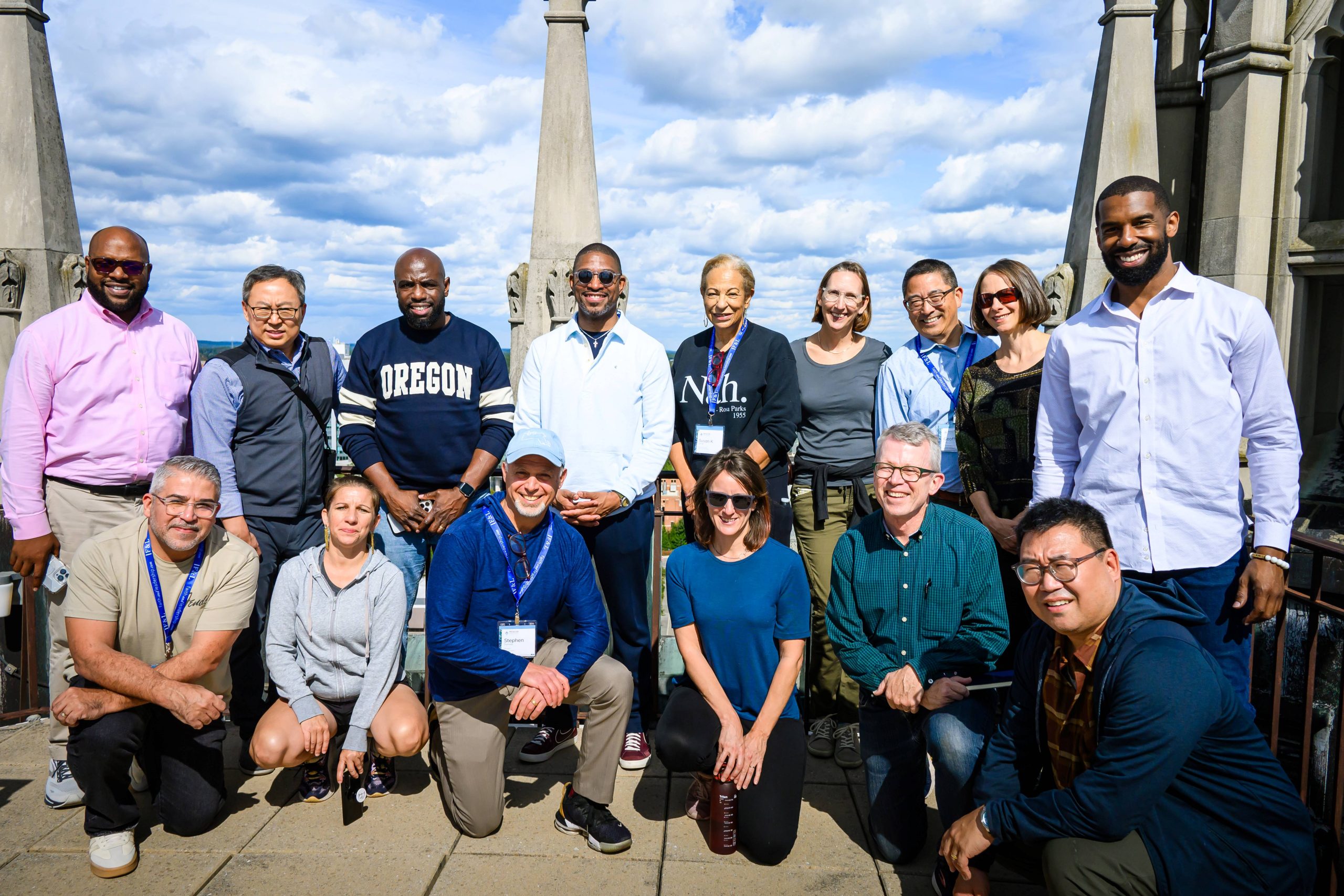
The Forum for Congregational Life invites applications from established lay and clergy leaders serving Christian, tax-exempt 501(c)(3) organizations in the United States. Ideal applicants have made a demonstrable contribution to their organization’s mission and now face an adaptive challenge: a significant opportunity, tension, transition or recurring concern that cannot be resolved through expertise, routine procedures or a technical solution alone.
Applicants may request up to $20,000 to support an intentional process of structured reflection connected to their current organization and ministry. Structured reflection is protected time for leaders to observe patterns, explore consequential questions, encounter new perspectives and discern what faithful leadership may require next. Applicants are not expected to know in advance what this process will reveal. Strong proposals will explain why this is a pivotal moment, identify the questions requiring sustained attention and present a thoughtful process for learning and discernment.
The program draws on Ronald Heifetz and Marty Linsky’s image of moving between the “dance floor” and the “balcony.” Reflective leaders step back from immediate activity to see the larger organizational system, return to the work to try a faithful response, observe its impact and use what they learn to guide further action. The goal is not to remain on the balcony, but to cultivate a durable practice of reflection alongside leadership.
Grant-supported activities might include:
- Protected time away from ordinary responsibilities, whether through an extended block or recurring shorter periods;
- Listening sessions or facilitated conversations with key stakeholders;
- Professional coaching, spiritual direction or consultation;
- Site visits, conferences and other learning experiences;
- Books and materials related to the leader’s questions;
- New practices or behaviors designed to test emerging learning; and
- Salary support, temporary coverage, childcare or senior care needed to protect the leader’s reflective time.
Each proposed activity should connect clearly to the applicant’s adaptive challenge, guiding questions and organizational context. Travel, conference attendance or extended leave are not sufficient by themselves; applicants should explain how each activity will help them observe, interpret, discern and return learning to their organization and community.
We welcome leaders serving congregations, denominations, seminaries, Christian colleges, nonprofits, social enterprises and other Christian organizations. We are particularly interested in leaders whose work contributes to healing and hope by strengthening congregations, ministries and communities.
The Reflective Leadership Grant is not intended to fund a traditional sabbatical, general vacation, academic degree, independent research project, personal career exploration or product-development project. Rest, reading, travel and learning may be included when they support a clearly articulated process of reflective leadership within the applicant’s current organizational context.
This grant is not meant to fund academic research or clergy sabbatical. For sabbatical support, please visit Lilly Endowment Clergy Renewal Programs. For scholarly research in Christian faith and life support, please visit Louisville Institute.
The Forum for Congregational Life plans to award up to 50 grants to the organizations representing the applicants who submit the most outstanding applications. In 2025, 39 Reflective Leadership Grants were awarded to institutions to support the applicant’s balcony time. See the 2025 winners here.
Quick Links
Past Grantees
Learn more about past grantees from 2025, 2024, 2023, 2019 and 2018.
Timeline
Application opens: October 8, 2026
Applicant Q&A Session 1: October 21, 2026, 1:00–2:00 p.m. ET. Register here.
Applicant Q&A Session 2: November 18, 2026, 12:00–1:00 p.m. ET. Register here.
Application deadline: December 7, 2026, 11:59 p.m. ET
Award notification: February 15, 2027
Grant period: April 1, 2027–August 31, 2028
Required grantee convening: June 2-4, 2027 in Durham, North Carolina
Final report deadline: September 30, 2028

FAQs
When can I apply for a Reflective Leadership Grant?
Applications for the 2027 Reflective Leadership Grants open October 8, 2026, and close December 7, 2026, at 11:59 p.m. ET. Award notifications are expected by February 15, 2027.
Can Forum staff provide feedback on my proposal idea?
Because this is a competitive grant program, Forum staff cannot advise applicants on the substance or competitiveness of a proposal.
Staff can answer questions about eligibility, application requirements, deadlines, the submission process and other technical matters. Please send those questions to grants.forum@duke.edu or attend one of the applicant Q&A sessions.
The Forum will host two applicant Q&A sessions:
- October 21, 2026, from 1:00–2:00 p.m. ET
- November 18, 2026, from 12:00–1:00 p.m. ET
Register here for the Q&A sessions.
How much funding is available, and what is the grant period?
Applicants may request up to $20,000. The Forum plans to award up to 50 grants to eligible organizations.
The grant period is April 1, 2027, through August 31, 2028. Final narrative and financial reports will be due September 30, 2028.
Who is an ideal applicant?
Ideal applicants are established lay or clergy leaders whose work has made a demonstrable contribution to the mission of a Christian, tax-exempt 501(c)(3) organization in the United States.
Applicants should be facing a pivotal moment within their current organizational or ministry context: a significant opportunity, tension, transition or recurring concern that requires sustained attention. Strong applicants can identify important questions even if they do not yet know what their reflective time will reveal.
What do you mean by “leader”? How do I know if I am eligible?
The Reflective Leadership Grant program is open to people serving in leadership roles within faith-based charitable organizations, including employees, contractors and volunteer leaders. Applicants may serve in a wide range of roles and settings, including congregations, denominations, seminaries, church-related colleges, Christian nonprofits, consultancies, social enterprises and other faith-based organizations.
We are especially interested in leaders whose work contributes to healing and hope in their communities by strengthening congregations, social services, schools and other organizations.
What is an adaptive challenge?
An adaptive challenge cannot be resolved through existing expertise, authority, routine procedures or a technical solution alone. It requires learning, changed behavior, new relationships or renewed attention to values, identity and loss.
A proposal may include technical activities, but it should explain how those activities support engagement with the deeper adaptive challenge facing the organization.
What is “balcony time”?
“Balcony time” is a metaphor for intentionally stepping back from the immediate activity of leadership to observe patterns, explore adaptive questions and discern what faithful participation may require next.
Grantees will move repeatedly between the balcony and the “dance floor”: stepping back to gain perspective, returning to the work to try an intervention, observing its impact and using what they learn to guide further action. The goal is not to withdraw permanently from leadership, but to cultivate a durable practice of reflection alongside action.
Learn more about balcony time.
What kinds of activities may the grant support?
Grant-supported activities should create perspective, generate learning or make structured reflection possible. Activities may include:
- Protected time away from ordinary responsibilities, whether in an extended block or recurring shorter periods;
- Listening sessions, interviews or facilitated conversations with key stakeholders;
- Professional coaching, spiritual direction, consultation or accompaniment by a trusted advisor;
- Site visits to organizations or leaders whose experience can illuminate the applicant’s questions;
- Conferences, seminars and other relevant learning experiences;
- Books and materials connected to the reflective process;
- New practices or behaviors designed to test emerging learning; and
- Salary support, temporary coverage, childcare or senior care needed to protect the applicant’s reflective time.
Travel, conference attendance or extended leave are not sufficient by themselves. The proposal should explain how each activity connects to the applicant’s adaptive challenge, guiding questions and organizational context.
Is this a sabbatical grant?
No. The Reflective Leadership Grant is not intended to fund a traditional sabbatical, general vacation or unrestricted leave from work.
Rest, reading, writing, travel and learning may be included when they support a clearly articulated process of reflective leadership within the applicant’s current organizational context.
For clergy sabbatical support, please visit Lilly Endowment Clergy Renewal Programs.
Does this grant support academic research, writing or degree-related work?
The grant does not support academic degrees, independent research projects, dissertations, memoirs, book manuscripts, online courses or other projects centered primarily on scholarly or commercial production.
An applicant currently enrolled in a degree program may apply, but grant funds cannot be used for tuition, academic requirements or degree-related research and travel. Modest reading, writing, research or travel may be included when they directly support the applicant’s reflective leadership process.
For support for scholarly research in Christian faith and life, please visit Louisville Institute.
Can an organization with an existing grant from Lilly Endowment Inc. or another funder apply?
Yes. An organization with a grant from another funder may apply. The application will ask about previous support for similar work and how the proposed Reflective Leadership Grant activities are distinct.
An organization that currently holds a Capacity Building Grant from the Forum for Congregational Life is not eligible to apply during this cycle.
 Is this grant available to religious leaders who are not Christian?
The program is designed for leaders serving Christian organizations or organizations with explicit Christian commitments whose work strengthens Christian congregations, ministries or communities.
Organizations without this relationship are not eligible for this grant opportunity.
Can a non-ordained leader apply?
Yes. The program welcomes both lay and ordained Christian leaders. Eligibility is based on the applicant’s established leadership, contribution to the organization’s mission and readiness for structured reflection — not ordination status.
What leadership roles are eligible for this grant?
We welcome established leaders serving in a range of roles, including pastors, program directors, associate ministers, denominational leaders, campus ministers, nonprofit executives, theological educators, consultants and social entrepreneurs.
Applicants should lead a program, department, ministry, initiative or other area of mission-centered work within an eligible organization. They should also be positioned to return learning from the grant to their organization and community.
Do I need to have served my organization for a specific amount of time?
There is no stated tenure requirement. However, applicants should be able to demonstrate a meaningful contribution to the organization’s mission and explain why this is a pivotal moment for both their leadership and the organization.
The grant is not intended primarily for personal career exploration or a job search outside the applicant’s current organization.
Can an organization serving communities outside the United States apply?
The applicant’s leadership and the majority of the organization’s work should be based in the United States. The organization must be a U.S.-based, tax-exempt 501(c)(3) organization capable of receiving, administering and reporting on the grant funds.
Can an international leader serving outside the United States apply?
The program is designed for leaders whose work primarily occurs in the United States. Proposals focused on leaders serving primarily outside the United States are not a fit for this opportunity.
Can my organization submit more than one proposal?
An organization may submit one proposal for one leader during this cycle.
If an organization consists of separately incorporated entities, each entity may submit one proposal if it has its own tax identification number.
Can a previous Reflective Leadership Grant recipient apply again?
Previous recipients must wait seven years from the completion of their earlier Reflective Leadership Grant before applying again.
Is there a page limit for the proposal?
The application includes:
- An online form with applicant and organizational information;
- A narrative document responding to the application questions;
- A reflective leadership plan;
- A proposed budget; and
- A signed letter of institutional support.
Narrative documents must be single-spaced, use 12-point Times New Roman font and remain within the word limits stated for each section. Appendices and additional supporting documents will not be accepted unless specifically requested.
How should I prepare the grant budget?
Applicants may request up to $20,000 and must use the expense categories provided in the application:
- Personnel;
- Contractors;
- Conference and event registration;
- Travel, accommodations and meals;
- Books and other materials;
- Equipment; and
- Other necessary expenses, such as childcare or senior care.
Travel may not exceed 20% of the total request. Equipment may not exceed 10%. Tuition and other degree-program expenses are not allowed.
The budget narrative should explain how each expense supports the applicant’s reflective leadership plan. Do not include expenses that will be paid by another funding source.
Can indirect costs be included in the budget?
If the applicant organization requires indirect costs, they should be included in the “Other” category and clearly identified in the budget narrative. Indirect costs may not exceed 10% of the total request.
Why is a letter of institutional support required?
Reflective Leadership Grants are awarded to organizations, not directly to individuals. The organization will receive, administer and report on the use of the funds.
The letter should confirm that:
- The applicant has contributed meaningfully to the organization’s mission;
- The organization understands the purpose of the proposed reflection;
- The applicant will receive protected time from ordinary responsibilities;
- Appropriate coverage or redistribution of duties has been considered;
- The organization will support the integration of relevant learning; and
- The applicant will be available for required convening and advisory-group activities.
Who should write the letter if I am the organization’s senior leader?
If the applicant is the organization’s senior officer, the letter must come from the chair of the governing board or a comparable governing body. Applicants may not write or sign their own letters of institutional support.
Can an organization apply through a fiscal sponsor?
The application must come from a Christian, tax-exempt 501(c)(3) organization that employs the applicant and has the capacity to receive, administer and report on the grant funds.
The application and institutional support letter should clearly describe the applicant’s relationship to the organization receiving the funds.
Does a church need a separate 501(c)(3) determination letter?
A church may receive the grant if it is recognized as tax-exempt and has a federal tax identification number. The organization must be able to receive, administer and report on the grant funds.
Is attendance at the grantee convening required?
Yes. Grant recipients must attend the in-person convening in Durham, North Carolina, from June 2–4, 2027.
The convening will introduce the cohort’s shared reflective leadership framework, strengthen each grantee’s reflective leadership plan and begin the learning community. Reasonable convening expenses will be paid directly by the Forum and separately from the grant award.
Are the advisory group sessions required?
Yes. Grantees will participate in scheduled advisory group sessions during the grant period.
These sessions are a core part of the program. Advisors and peers will help grantees interpret what they are observing, connect activities to learning, engage challenging areas of growth and consider how emerging insight should return to action.
What happens if the grant recipient changes roles or leaves the organization?
The grant is awarded to the organization and is not portable.
If the recipient changes roles but remains employed by the same organization, the Forum will determine whether the approved grant activities can continue. If the recipient leaves the organization before or during the grant period, grant activities and expenditures must stop. The organization must notify the Forum, return unspent funds and provide a final financial accounting.
An applicant who leaves the organization after submitting a proposal should withdraw the application.
Will the Forum offer another Reflective Leadership Grants cycle?
The Forum anticipates opening another cycle of Reflective Leadership Grants in spring 2027. Applicants who are not selected during the current cycle may apply again in a future cycle.
Report Guidelines
Current Reflective Leadership grantees can find final report guidelines for their grant year here.