

Overview
Note: More information on the 2026 Reflective Leadership Grant timeline will be available in the fall of 2026.
The Reflective Leadership Grant supports an opportunity for structured reflection. Ideal applicants are lay or clergy leaders of Christian organizations, specifically those organizations that are advancing their mission following the complex opportunities and challenges that emerged and/or intensified throughout the past few years.
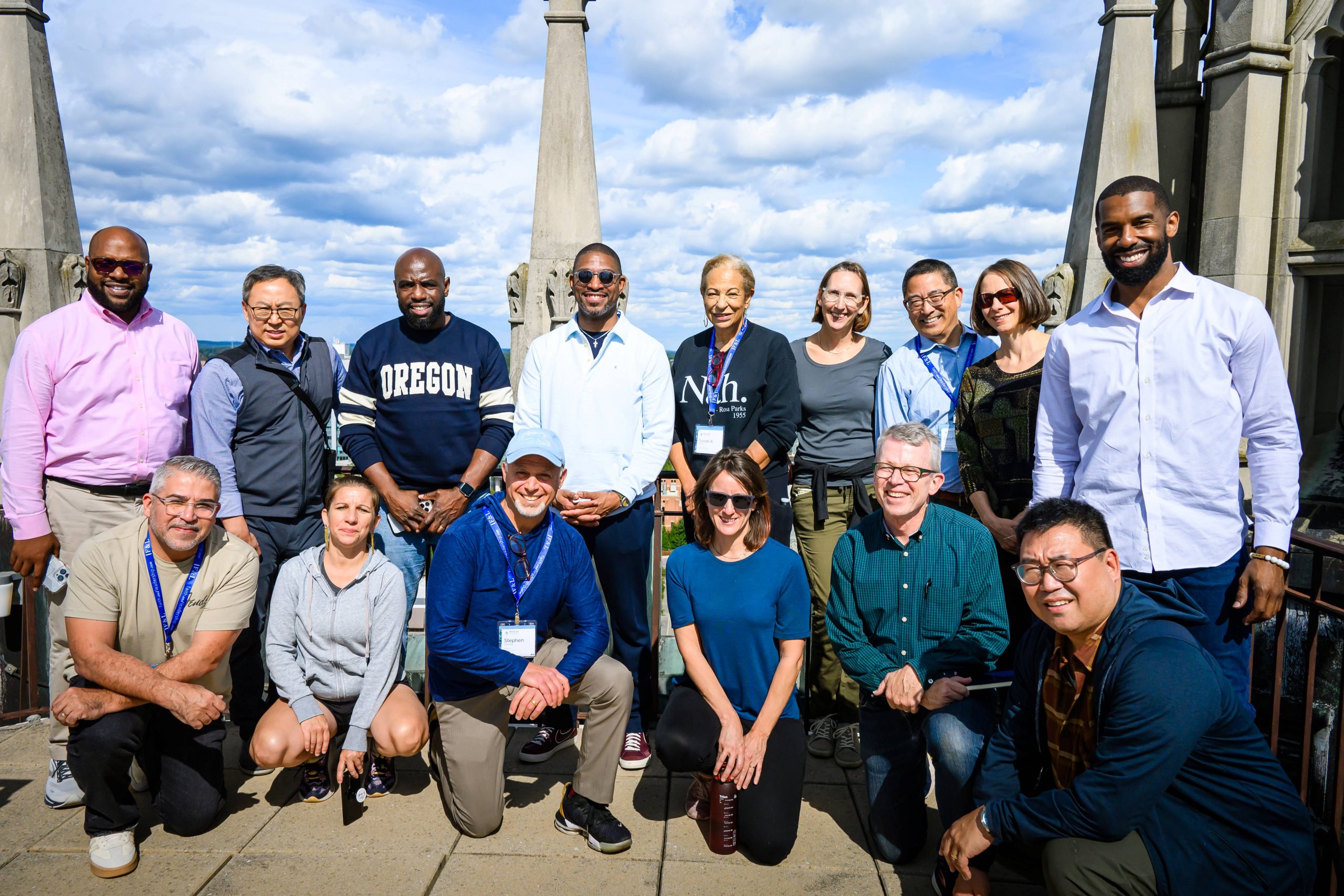 While all leaders are encouraged to practice some form of ongoing reflection, this grant aims to support those leaders whose work has made a demonstrable contribution to their organization's mission. These leaders are at a pivotal moment for stepping back and reflecting to assess their ministry (what has been accomplished), evaluate organizational progress (what is changing and what is stable) and chart the next steps in their personal and ministry journey. The Reflective Leadership Grant allows leaders to broaden their perspectives and gain clarity about what needs to happen next in their personal and professional life.
Since our founding in 2008, Leadership Education at Duke Divinity has observed established Christian institutions experimenting with surprising collaborators and alternative expressions of ministry. We also have observed new Christian ministries being created to address challenges in fresh ways. The leaders in these ministry efforts often operate with slim margins of both financial support and available time. By inviting the application for a modest grant of up to $15,000, we intend to encourage these leaders to consider the questions and issues that should be pursued and how to address the opportunities and challenges in the next phase of ministry at the intersection of their personal and organizational life.
This grant program is for leaders who are ready to design the next chapter in their ministry. It invites leaders to reflect on their journey, their organization's current position and how the two can evolve. Applicants may seek to cultivate new partnerships, expand their networks or reimagine practices and strategies in line with the organization’s core mission. Applicants might realize that their work needs to be framed or re-framed to cultivate new supporters and allies. Other applicants might have helped their staff or volunteers in expanding their ministry, but as the leader, they need time and perspective to chart out next steps for an enlarged vision.
A critical element of the application will be articulating why this is a pivotal moment for the leader and the ministry. Applicants must identify the opportunity they seek to explore and how a period of reflection will enhance their ability to lead with greater clarity and purpose.
Some questions to consider: What is the opportunity, and how might a season of structured reflection help the leader gain perspective? What is the vision of the work, and how do practices need to be reimagined to realign with the organization’s “why?”
Research suggests that such perspective-taking is an important component of discernment. For example, Harvard professor Ron Heifetz calls such an opportunity “balcony time,” which allows a leader to move from the dance floor to the balcony to gain a broader picture of the work, organization, community and trends. This balcony time could take the following forms:
- Extended leave or multiple shorter retreats for site visits and exposure to exemplary ministry models
- Learning experiences such as attending a conference, event or seminar and reflecting on insights gained
- Professional coaching or mentorship: engaging a consultant or coach for focused guidance
We recognize that such balcony time can have costs for the applicant’s organization and family, which can be accounted for in the grant proposal.
We welcome applicants who serve in a range of leadership roles, from project director to senior administrator, and who are working in a variety of organizations, including denominations, seminaries, church-related colleges, consultancies, congregations, Christian nonprofits, Christian social enterprises and others. We are particularly interested in supporting leaders whose work contributes to healing and hope in their communities by strengthening congregations, social services, schools and other organizations.
This grant is not meant to fund academic research or clergy sabbatical. For sabbatical support, please visit Lilly Endowment Clergy Renewal Programs.
Leadership Education plans to award upwards of 30 grants to the organizations representing the applicants who submit the most outstanding applications. In 2025, 39 Reflective Leadership Grants were awarded to institutions to support the applicant’s balcony time. See the 2025 winners here.
Past Grantees
Learn more about past grantees from 2025, 2024, 2023, 2019 and 2018.
 Timeline
More information on the 2026 Reflective Leadership Grant timeline will be available in the fall of 2026.
FAQs
Can the director of programs and grants provide feedback on our ideas?
Leadership Education is most interested in supporting leaders who are at a critical moment for stepping back and reflecting on what has been accomplished in their work, what is changing and what is stable. Excellent proposals will clearly articulate why this is the right time for the leader to invest their energy in broadening their perspectives and gaining clarity about what needs to happen next.
Due to the competitive nature of this grant program, Leadership Education is not able to offer guidance about the substance of your proposal. If you have questions about technical matters, please send those questions to leadership@div.duke.edu.
Can an institution with an existing grant from Lilly Endowment Inc. or any other granting organization apply for a Reflective Leadership Grant?
Yes, an institution with a current grant from another institution may apply. As part of the application, we invite you to let us know of any similar grants you have received in the past and how the work you wish to do with a Reflective Leadership Grant is different.
Does this grant program support research or travel for academic degrees?
Leadership Education does not intend for the Reflective Leadership Grant program to be a fellowship program for work toward an academic degree, including the doctor of ministry degree. It is acceptable for some part of the grant activities to involve travel and research pertaining to the applicant’s work and beneficial to determining next steps. However, if plans are strictly dedicated to work involved in the pursuit of a degree, Leadership Education advises applicants to find support elsewhere.
If you are currently enrolled in a degree program, you are welcome to apply for a Reflective Leadership Grant. However, funds from the grant cannot be used for the degree program’s research or travel.
Is this grant program available to religious leaders who are not Christian?
The Reflective Leadership Grant Program builds on and extends Leadership Education’s efforts to create lasting change by strengthening the ecology of Christian institutions that enable U.S. congregations and pastors to flourish. Therefore, we discourage the submission of a proposal focused on religious leaders from other faith traditions.
Will you accept an applicant’s proposal from an organization that provides services outside the United States?
Any faith-based charitable organizations in the United States are eligible to apply for a Reflective Leadership Grant on behalf of one of their employees. We encourage organizations to submit proposals in which the majority of the organization’s work occurs in the United States.
Will you accept a proposal from international leaders serving in countries other than the United States?
We encourage faith-based charitable organizations in the United States to submit proposals on behalf of applicants whose work primarily occurs in the United States. Therefore, we discourage the submission of a proposal focused on leaders not serving in the U.S.
Can a non-ordained leader apply for this grant?
This grant aims to support lay or clergy leaders whose work has made a demonstrable contribution to their organization’s mission. The intent of this grant program is to provide balcony time to any employee of a faith-based charitable organization whose work is at a pivotal point where time and space to reflect on next steps would be beneficial. Therefore, we encourage both lay and ordained Christian leaders to apply.
What is your definition of “leader”? I am a pastor/professor/program director/associate minister/denominational employee/associate director/campus minister/entrepreneur/academic dean/consultant/youth minister, etc. How do I know if I am eligible?
The Reflective Leadership Grant program is open to any employee of a faith-based charitable organization. We welcome applicants who serve in a range of leadership roles, from project director to senior administrator, and who are working in a variety of organizations, including denominations, seminaries, church-related colleges, consultancies, congregations, Christian nonprofits, Christian social enterprises and others. We are particularly interested in supporting leaders whose work contributes to healing and hope in their communities by strengthening congregations, social services, schools and other organizations.
When should I propose to start the grant?
Leadership Education anticipates notifying organizations of funding decisions by July 18, 2025. The Reflective Leadership Grant funds will be available to the selected organizations in September 2025, and the grant period is September 2025 - March 2027. Therefore, if awarded, you may begin your grant activities any time after September 1, 2025.
Can my organization submit multiple proposals for different leaders?
We encourage an organization to submit one proposal for balcony time for one leader per year. If, however, your organization consists of multiple entities, then you may submit one proposal for each entity, but each entity must have its own tax ID number.
Is there a page limit for proposals?
The application process for a proposal includes:
- An online form with basic demographic and organizational information.
- Narrative questions to be answered separately in Word or PDF documents and uploaded to the online form. Each response should follow the designated word count, and each document should be single-spaced with 12-point Times New Roman font.
- Budget template.
- Letter of institutional support.
Appendixes or additional documents will not be accepted.
 Can you provide guidance on how to present our grant budget?
We ask that you please provide a line item budget in a table format following the template provided. The budget uses the following categories:
- Personnel (coverage of program team time for employees of the organization)
- Contractors (meeting facilitator stipend; speakers; content expert; pulpit supply)
- Tuition and/or registration costs (fees associated with attending events or conferences)
- Travel, accommodations and meals (ground and air transportation expenses and meals)
- Books and other materials (planning materials, etc.)
- Equipment (may not exceed 10% of overall budget)
- Other (childcare, etc.)
- Your budget must total no more than $15,000.
Does Leadership Education anticipate offering this opportunity again next year?
Yes, Leadership Education plans to offer this opportunity in 2026. Applicants not selected in 2025 are encouraged to apply the next year.
Do I need to have been with my organization for a specific amount of time in order to be eligible for this grant?
While there is not a tenure requirement for this grant program, we are looking for leaders whose ministry has accomplished significant goals and who are thus ready to design the next chapter in their ministry. You may be at a point where you realize that your work needs to be framed or re-framed in a way that cultivates new supporters and allies. You might have developed colleagues as staff or volunteers to further the ministry in such a way that more can be accomplished, and you need time and perspective to chart out next steps for an enlarged vision. A critical element of the application is articulating why this is a pivotal moment for you and your ministry: what is the opportunity, and how might a season of structured reflection help gain perspective?
Why do I need a letter of institutional support from my organization? Can’t I apply for the grant on my own?
The funds for a Reflective Leadership Grant must go to a faith-based charitable organization, not an individual. Therefore, the senior officer of your organization makes the official request for the funding on behalf of the applicant.
If I am the CEO of my organization, does the institutional letter of support need to be signed by someone else?
The organization is the fiscal agent for the grant; therefore the senior officer of the organization must submit a signed letter of request and support on behalf of the applicant. A letter from the applicant’s board of directors or advisors will be acceptable if the applicant is the senior officer. The applicant is unable to submit their own letter of support.
If awarded the grant, do I have to attend the Reflective Leadership Grant convening?
Yes. Applicants are asked to commit to attend a convening in Durham, North Carolina. This convening will bring all recipients together for a collaborative learning experience as they begin their balcony time. All reasonable expenses for the retreat will be paid separately from the grant.
If a grant director changes position during the grant timeline, what will happen to the grant?
If the grant director remains within the organization from which they applied, they will be able to continue the grant proposal. If the grant director leaves the grantee organization/institution, the remaining grant funds will be returned to Leadership Education.
What are indirect and direct funds? How should they be covered in the grant budget?
Some organizations require payment on the receiving funds; this is known as "indirect funds." If your organization requires indirect funds, the applicant should specify this in the "Other" category of their budget. The final budget amount should not exceed $15,000. Indirect costs cannot exceed 10%.
Can the organization have a fiscal agent that holds the 501c(3) or must it be established as its own?
The grant application must be from an organization that has a 501c(3) tax status. The grant director should describe in the application how the director’s work is related to the organization receiving the funds. This can be found in question two of the narrative. The letter of institutional support should also indicate the relationship of the grant director to the organization.
If I am applying from a church, does the church require a separate 501c(3)?
The church is able to receive the grant as long as it has a tax ID number.
Where can I find the final report guidelines?
Current Reflective Leadership grantees can find final report guidelines for their grant year here.
Report Guidelines
Current Reflective Leadership grantees can find final report guidelines for their grant year here.