

 Leadership Education at Duke Divinity grants Traditioned Innovation Awards to initiatives that engage in experiments to transform communities by living out the convictions of an ancient faith in the current challenging circumstances.
“Traditioned innovation” is a way of thinking developed by theologian L. Gregory Jones that holds the past and future in tension, not in opposition, and is crucial to the growth and vitality of Christian institutions. The awardees inspire Christian leaders to consider our convictions and daily activities so that we may more abundantly bear witness to the reign of God. They do that by:
- embodying one or more Christian practices in their pattern of work;
- cultivating an economic imagination for sponsors, participants and observers;
- nurturing the conditions for friendships that move beyond transactional relationships to ones of mutual appreciation, learning and growth;
- rooting their work in building and sustaining community; and
- inspiring and nurturing other groups with similar vision for thriving communities
The 2025 winners are Christian Latina Leadership Institute in San Antonio, Texas; Cultivate Abundance in Immokalee, Florida; Eloheh Indigenous Center for Earth Justice in Yamhill, Oregon; and Neighborhood Resilience Project in Pittsburgh, Pennsylvania. Each will receive $10,000 and be featured in Faith & Leadership.
A panel of judges collects nominations and recommends award recipients.
The Traditioned Innovation Award recognizes and affirms the faithful and innovative work of an outstanding community initiative rooted in Christian practices,” said Victoria White, director of grants for Leadership Education. “This year the award focuses on catalytic organizations that are effective in their own community while also nurturing groups with similar vision for thriving communities. Their work creates a broad impact because they are committed to cultivating future faith-rooted leaders and creating interconnected networks for sharing resources and support. Focusing on the flourishing of others while also transforming their own communities, especially in this season of change and uncertainty, is work we want to affirm. Catalytic leaders are making thoughtful and strategic decisions to guide their institutions through uncertainty and often come out stronger on the other side.
2025 Award Winners
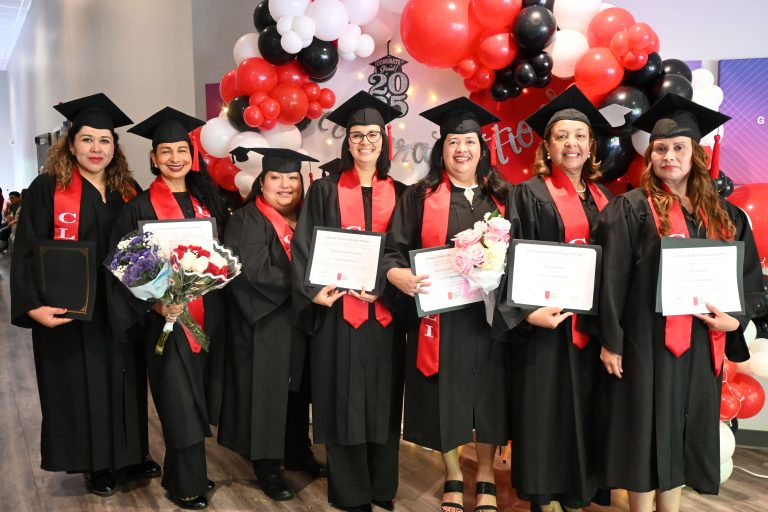
Christian Latina Leadership Institute in San Antonio, Texas
Christian Latina Leadership Institute identifies, develops and trains women from the Latina perspective to serve in churches and communities. Participants, Latinas and Latinas-at-heart, receive instruction from accomplished female Christian leaders whose knowledge and expertise help equip emergent and established leaders for today’s challenges in church and society. While their studies culminate in a certificate in leadership studies, also of profound value are the relationships and friendships that emerge and are woven into a growing network of powerful and motivated Latina leaders.
The Institute centers relational formation within a supportive, intergenerational context as they provide mentorship, spiritual discipleship and theological reflection and nurture a sense of call. The institute practices radical hospitality, honoring the gifts, stories and identities of Latina women who are often sidelined in broader theological or institutional spaces. They are cultivating an alternative economic imagination by equipping women to see themselves as the stewards, leaders and creators of sustainable change in their families, congregations, neighborhoods and beyond.
How does Christian Latina Leadership Institute embody traditioned innovation?
Christian Latina Leadership Institute exemplifies traditioned innovation by grounding Latina women in biblical, theological and cultural traditions while equipping them with modern leadership, organizational and entrepreneurial skills to enrich their churches and communities. Their courses and practices honor inherited generational spiritual wisdom while preparing women to lead transformative change in today’s complex social and ecclesial landscapes.
Read more about Christian Latina Leadership Institute here.
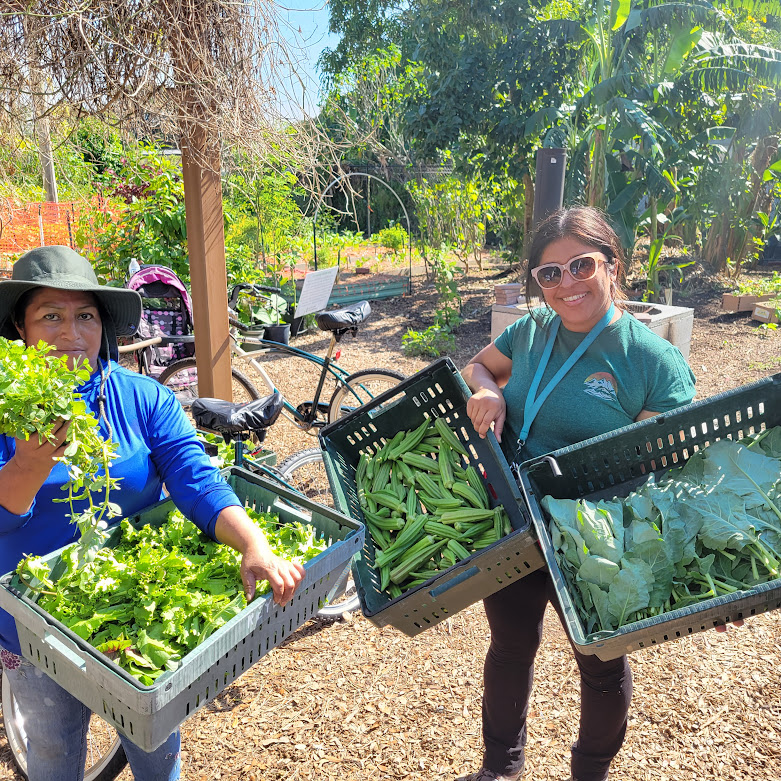
Cultivate Abundance in Immokalee, Florida
Cultivate Abundance confronts food insecurity among southwest Florida farmworkers by partnering with community partners to grow, share and redistribute culturally appropriate and nutritious food through home gardens and local networks. Their work affirms the dignity of farmworkers and models a theology of abundance that transforms scarcity into shared sufficiency. From a faith and conscience perspective, they are focused on serving the “least of these” (Matthew 25:40) with a passion for justice along with a commitment to love God and their neighbors.
In addition to food production and distribution, Cultivate Abundance encourages residents to engage in home gardening for improved nutrition, particularly by sharing information, ideas, seeds, soil and tools to help families grow their own food and preserve cultural food traditions. Nurturing mutual aid, their model meets immediate hunger needs while building healthy relationships and long-term food sovereignty in the community. Partnering with local congregations, nonprofits, home gardeners and small family farms, they invoke conversations about the injustices of the food system in the United States and model a more inclusive vision for who our neighbors are, moving beyond charity to shared responsibility and flourishing.
How does Cultivate Abundance embody traditioned innovation?
Cultivate Abundance exemplifies traditioned innovation by combining Christian values and cultural food traditions with creative, community-led solutions to food insecurity. Their work is explicitly shaped by Scripture, guiding their commitment to stand with the marginalized, love their neighbors and pursue justice with humility and integrity, while also honoring food heritage and ancestral practices like seed saving and home gardening and using innovative models to build food justice and resilience in immigrant farmworker communities.
Read more about Cultivate Abundance here.
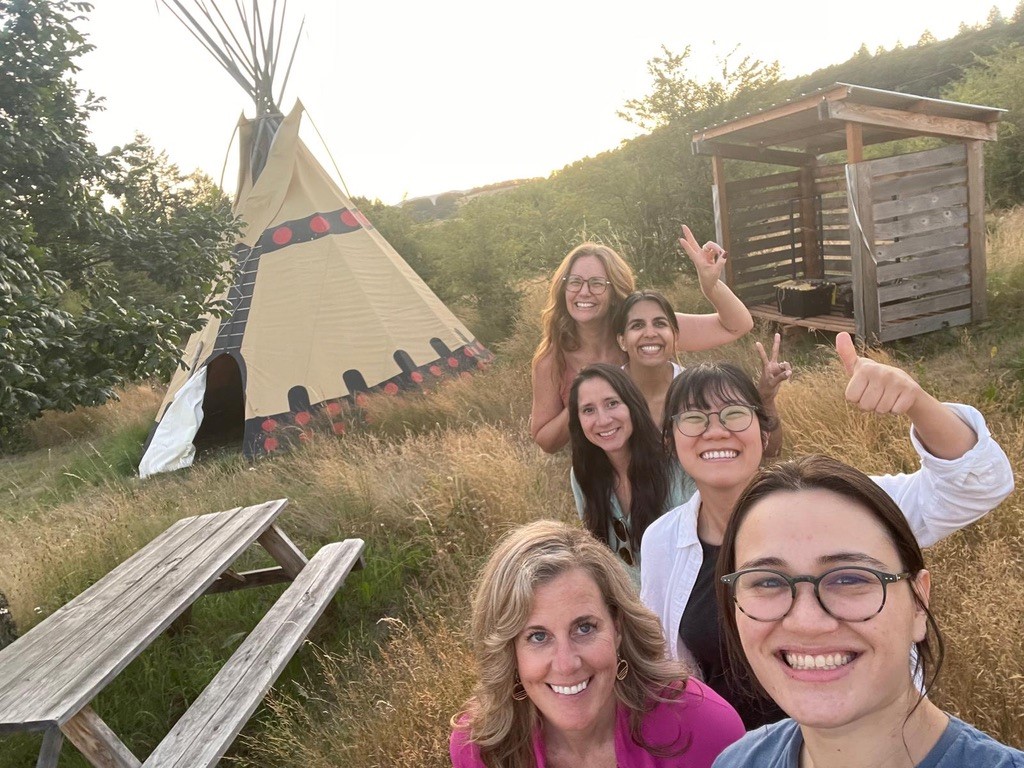
Eloheh Indigenous Center for Earth Justice in Yamhill, Oregon
Eloheh Indigenous Center for Earth Justice challenges the Western worldview that has distorted Christianity and damaged creation. The center trains leaders by returning them to an Indigenous Jesus — one who taught from hillsides and wheat fields, who drew lessons from fig trees and fishing nets, who understood that God’s creation is our first and most faithful teacher. Founders Randy (Keetoowah Cherokee) and Edith (Eastern Shoshone) Woodley guide leadership formation through Eloheh Farm & Seeds in Oregon’s northern Willamette Valley, on the traditional lands of the Kalapuyan people. The land reveals what buildings and books cannot — patience learned through planting seasons, humility through tending soil, interdependence through observing ecosystems and generosity through seed saving and sharing.
Participants practice co-sustaining the web of life, discovering their place as servants rather than masters, learning to lead through relationship rather than extraction, reciprocity rather than domination. This formation shapes leaders differently. Participants return to congregations and organizations with embodied wisdom: that all contributions matter because all of creation matters, that strength comes through collaboration rather than hierarchy, that abundance flows from honoring limits rather than ignoring them. They’ve learned these principles by living them — by working with their hands, observing natural cycles and experiencing what happens when humans align with creation’s rhythms rather than fighting them.
How does Eloheh embody traditional innovation?
Indigenous peoples have always known that creation teaches what humans need to learn, that the earth holds wisdom for those who listen. Jesus himself taught this way, drawing divine truth from mustard seeds and sparrows. Eloheh recalls faith communities to this forgotten theology — that understanding God’s creation makes better leaders because it teaches us to lead the way creation itself leads: through mutual flourishing, patient growth, generous abundance and attention to the whole. Eloheh catalyzes this learning beyond its own 10 acres by training cohorts of leaders who carry these creation-based principles back to their communities, creating networks of practitioners who lead from earth wisdom in their own context. What looks innovative — leaders formed by dirt and seeds, theology rooted in soil — is actually the recovery of how faithful people have always learned: from the book of creation itself, the way Jesus taught.
Read more about Eloheh here.
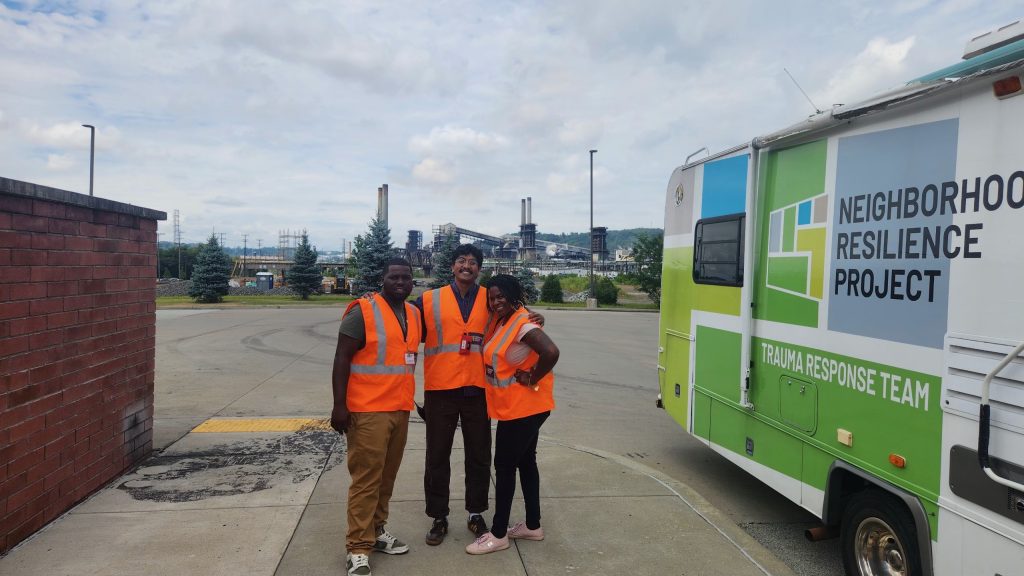
Neighborhood Resilience Project in Pittsburgh, Pennsylvania
Neighborhood Resilience Project supports the transformation of neighborhoods from trauma-affected communities to resilient healing and healthy communities through trauma-informed community development. Their block-by-block community care, rooted in a local congregation, involves a free medical and dental clinic, food and clothing pantries and a trauma-response team offering holistic care in the aftermath of traumatic incidents. They are a training center for public officials and faith leaders in trauma-informed care, improving the health and resilience of the city by meeting the urgent needs of hunger, housing and healthcare across Pittsburgh.
A leading voice in trauma-informed and spiritually rooted care, NRP partners with research and academic institutions to consistently refine their methods, and they partner with government agencies such as the department of human services, local police and public health officials to provide a holistic approach to cultivating a resilient city. They seek to inspire a movement in which suffering people are raised up from the ashes of trauma in unconditional love to become empowered healers, community builders and positive change makers.
How does Neighborhood Resilience Project embody traditioned innovation?
Rooted in the Gospel and teachings of the Orthodox Church, and inspired by the Civil Rights Movement, NRP combines Orthodox-informed spiritual care and research-based trauma-informed community development to unapologetically address the needs of their neighbors. They blend psychology, public health, urban ministry and Orthodox Christian faith in the work of service, justice, mercy, compassion and presence.
Read more about Neighborhood Resilience Project here.